our history
Deep Roots, Wide branches
Over 140 years of witness & welcome in the city.
Have you ever felt like you didn’t belong?
So did the soldiers at Fort Sam Houston in the 1880s. After the Civil War, the U.S. Army reintegrated and sent northern soldiers south. The Yankee families weren’t welcomed at other churches in town that still nursed some Confederate sympathies, and one young man wrote a letter to his family in Philadelphia explaining the situation. His philanthropist aunt, Mary Coles, was the daughter of a prominent abolitionist and she wrote a $10,000 check to plant St. Paul’s Episcopal Church in 1883.
This new congregation vowed to be a “free church,” meaning we have never charged money for seats in the pews. Over 140 years later we remain faithful to this origin story: providing a place for people who don’t feel like they belong, rooted in the liberating love of Jesus Christ.
St. Paul’s has an exciting history tied to the life of Fort Sam and our neighborhood, Government Hill.
We’ve been a tiny church, and a big one.
We closed our doors during World War I when the whole congregation was sent off to fight. In the 1950s we had hundreds of regular worshippers, over 200 kids in Sunday School, and even broadcast our services on television. We started a food pantry in the 1980s to address the needs of our neighbors which we still operate today, serving those who have been here long before the Pearl made our area hip. Today we welcome worshippers from all over the world, yet we’re still proud of the deep roots we have in the city of San Antonio.
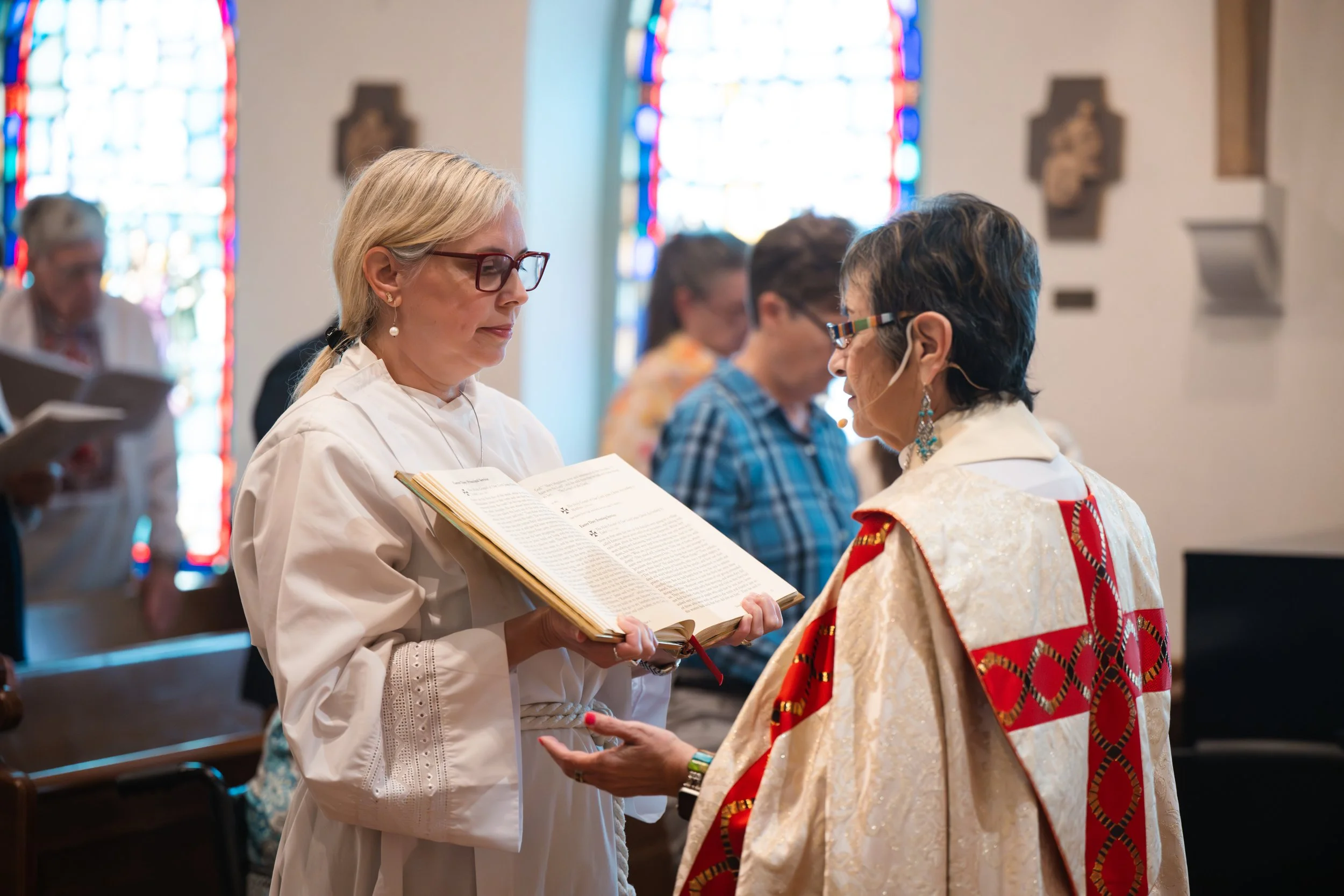
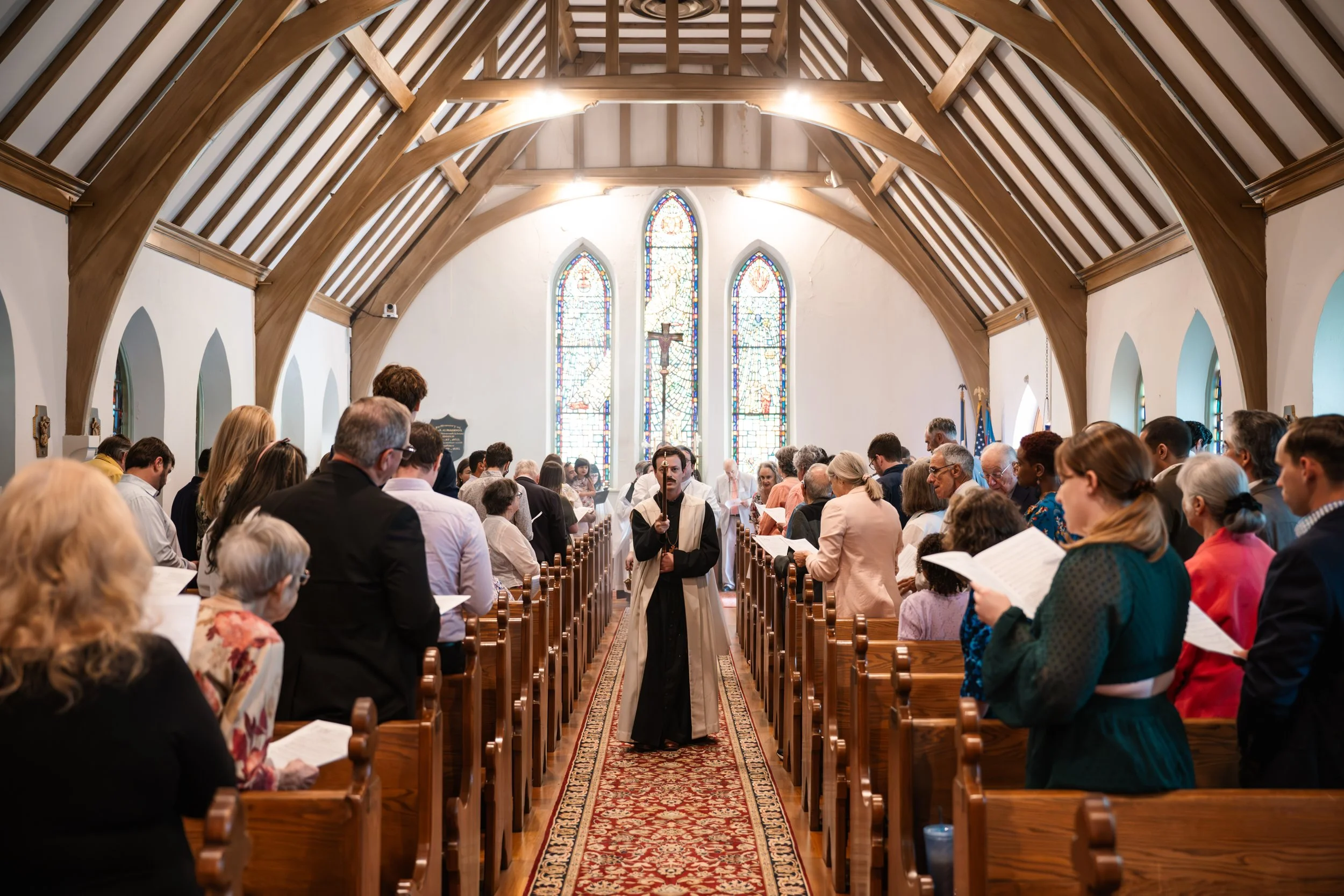
From the beginning, St. Paul’s has been known for its distinct style of worship. Bishop James “Steptoe” Johnson wrote in 1888, “I enjoy the service here [at St. Paul’s], it is reverent, decent, & orderly.” In the 1960s, we hosted a liturgical conference that brought hundreds of Episcopalians to San Antonio to learn about excellent worship. Today, our worship tradition (called “Anglo-catholic”) is reflected in the use of incense, bells, ornate robes, and melodic chanting. Throughout our history, we have championed this style of reverent, beautiful worship that is centered on the sacraments.
We are committed to widening the circle of human concern.
Over many decades St. Paul’s has welcomed Yankees, communists, black folks, and LGBTQ+ people when they were not welcome, wanted, or integrated elsewhere. One memorable scene during the Red Scare involves a priest, wanting to invite a communist as a guest speaker, challenging the vestry, composed entirely of army officers, by saying: “You fought for free speech, now let us have it!” We appointed the first female Senior Warden in the Diocese of West Texas, Col. Agnes Maley, in 1968.
We were one of the first churches in the diocese to offer same-sex marriage in the 2000s, and the first Episcopal Church to march in the San Antonio Pride Parade. We have never believed that difference of opinion disqualified anyone from being part of our community.
The Episcopal Church
The Episcopal Church has its origins in the congregations that the Church of England established in colonial America. After the American Revolution, those parishes became independent of the Church of England (because the Church of England is the established church of the English state, it can really only exist in places under British jurisdiction).
So these congregations joined together to form the Episcopal Church.
Over the subsequent centuries, many other groups have left or separated from the Church of England. Some, such as the Puritans and (much later) the Methodists, had substantial disagreements on matters of doctrine or church order, and have gone on to establish their own unique traditions of Christianity. Others, such as the Episcopal Church, have largely retained the doctrine, worship and customs of the Church of England — the tradition of Christianity we call ‘Anglicanism’.
The Church of England, in turn, came into being when Henry VIII assumed authority over the Catholic Church in England in 1534. Throughout the tumultuous sixteenth century, the Church of England worked out a unique form of Christian faith and practice: catholic (a sacramental church, heirs to the rich traditions of undivided Christianity) and reformed (worshipping in the language of the people, emphasizing salvation by grace through faith). The Book of Common Prayer, the official liturgy of the Church of England, established a pattern and standard for worship that Anglicans cherish to this day.
The Church of England established parishes around the world as the British Empire expanded in the eighteenth and nineteenth centuries. For the same reasons that the Episcopal Church came into being, many new Anglican churches came into being in the twentieth century as those former British territories became independent nations.
These Anglican churches are all fully independent and self-governing, but maintain close relationships with the Church of England and with each other through the worldwide Anglican Communion.